1.2
932,000
1.8
41,000
Families are still stretching one paycheck across rent, food, and everything else, while businesses continue to close around them. Kids watch their fathers button up an army green uniform instead of a work shirt, not knowing when or if they will return. Requests for food assistance across Israel are already up 30% this year, and war could start again at any second, making things even worse.
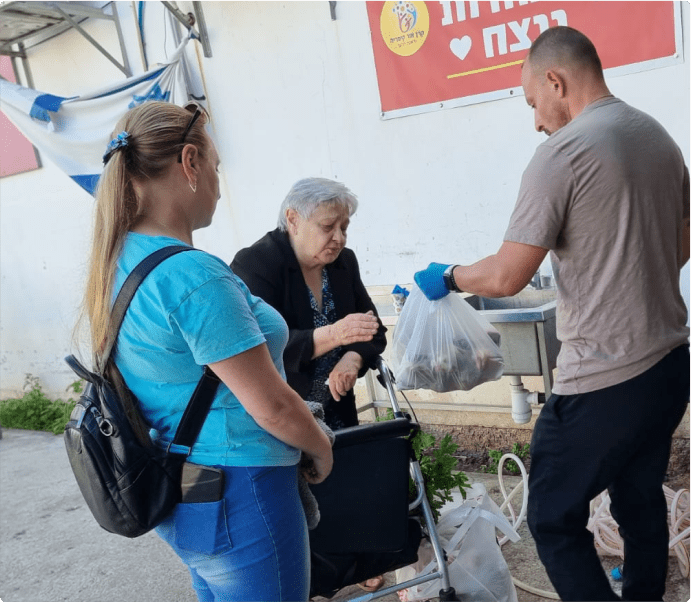
For many of our Holocaust survivors, this isn’t the first war they’ve lived through. They survived the unimaginable decades ago, rebuilt a life in Israel, and now, in what should be their most peaceful years, they’re living through another one. Many are in their eighties and nineties.
For some, this could be their last holiday, and spending it alone, in a quiet apartment with an empty fridge, is a reality too many already know. After everything they’ve already survived, the least they deserve this High Holidays is a full plate and a familiar face.
For so many families in Israel, this isn’t about one bad month. It’s parents doing everything right and still coming up short. Over 25% of the country earns minimum wage, and even with two incomes, rent, groceries, and everyday costs keep climbing faster than paychecks can keep up.
These are parents skipping meals so their kids don’t have to, choosing between the electric bill and a full grocery cart, and trying to figure out how to make the holidays feel special when they may be thousands of shekels in debt. They are doing everything they can. For too many, it still isn’t enough, and they’re fighting that struggle largely on their own.
For most kids in Israel, the holidays mean new clothing and the smell of their mom’s kitchen filling up with their favorite traditional foods. For kids growing up in poverty, the holidays look different. There’s no extra money for new shoes when the ones they have are already too small. There’s no new outfit to wear to synagogue or to shared meals. The empty pantry means there’s nothing for dinner tonight, let alone the ingredients for their mom’s famous pomegranate chicken.
This High Holidays, they deserve to be shielded from a fight that was never theirs, and the chance to feel like every other kid at the table.
For thousands of reservist families, this holiday means an empty chair at the table. Husbands and fathers have been gone for hundreds of days, and that absence is taking a toll on every part of their lives: lost jobs, strained marriages, children who don’t understand why a parent isn’t home, and finances stretched thin.
Beyond the reservists still serving, over 22,000 soldiers have been injured since October 7, and some parents have had to leave their own jobs to care for a child recovering physically or mentally. Other families are grieving a spouse or child lost on the battlefield.
How can you think about cooking or working when you are needed to support your child?
75,000
Holiday pantry boxes, stocked with legumes, tomato paste, canned goods, and other pantry basics.
In prepaid grocery cards, so families can shop for what they actually need and cook the recipes that make the holiday feel like their own.
25,000
Holiday meals, including meat, fish, and challah, along with simanim, the symbolic foods eaten for a sweet new year, such as apples, pomegranates, and honey.
3
Warm, shared holiday meals at our branches, where families come together for delicious food, singing, and a sense of belonging.
American Friends of Meir Panim is a registered 501(c) (3) non-profit organization, registered under EIN Number 20-1582478 Donations to American Friends of Meir Panim are Tax Deductible in the USA.